

What Is the Best Hydrating Serum for Dry, Sensitive Skin?

Last Updated: October 26, 2026
Quick Summary
The best hydrating serum for dry, sensitive skin is the Organic Sacred Frankincense Hyaluronic Acid Serum, $49.99, because it delivers deep hydration without the irritation risks common in conventional formulas. It absorbs quickly, leaves no greasy residue, and layers cleanly under moisturizer and makeup.
- Apply humectant serums to damp skin within a minute of cleansing so humectants have water to bind.
- The Renewal formula uses Sodium Ascorbyl Phosphate instead of L-ascorbic acid to reduce irritation risk.
- Press 2 to 3 drops of serum into face, neck, and décolleté, then wait 30 to 60 seconds.
- In low humidity, add a richer moisturizer or facial oil at night rather than layering more serum.
- Give any formula four to six weeks of consistent daily use before judging it.
Table of Contents
- Quick Comparison: Hydrating Serums for Dry, Sensitive Skin
- How We Evaluated These Hydrating Serums
- Best Overall Hydrating Serum for Dry, Sensitive Skin
- Best Barrier-Supporting Serum for Reactive Skin
- Best Concentrated Serum for Very Dry, Aging Skin
- Hydrating Serum Ingredients for Sensitive Skin That Actually Help
- How to Rehydrate Extremely Dry Skin Without Triggering Redness
- How to Use Hydrating Serum in a Daily Routine
- Choosing Your Hydrating Serum
- Frequently Asked Questions
Quick Comparison: Hydrating Serums for Dry, Sensitive Skin
Finding the best hydrating serum for dry sensitive skin starts with knowing what your barrier actually needs: water-binding ingredients, lipid support, and nothing that stings. At Natural Beauty Skincare®, we have spent over 30 years formulating botanical skincare for reactive skin, and we built this shortlist around that experience rather than around marketing claims.
Here is the quick version before the detail:
| Pick | Best For | Price | Format |
|---|---|---|---|
| Organic Sacred Frankincense Hyaluronic Acid Serum | Best overall for dry, sensitive skin | $49.99 | Lightweight water-based serum |
| Organic Sacred Frankincense Hyaluronic Acid Serum (Renewal) | Reactive, barrier-compromised skin | $49.99 | Fast-absorbing vegan serum |
| Rose Otto Wrinkle Reducer | Very dry, aging skin needing oil-based sealing | $110.99 | Concentrated botanical face oil |
A hydrating serum is a lightweight, fast-absorbing formula built around humectants that draw water into the upper layers of skin. For dry, sensitive skin, the right one adds moisture without fragrance load or harsh actives.
Below, we explain how we evaluated each option, what belongs in a sensitive-skin formula, and how to slot a serum into a routine that calms rather than inflames.
How We Evaluated These Hydrating Serums
We judged every serum on four criteria: ingredient transparency, suitability for reactive skin, texture and layering behavior, and value for the format.
Ingredient transparency came first. A serum earns a place here only if the full ingredient list is published and free of synthetic fragrance, drying alcohols in high concentration, and unnecessary exfoliating acids. Sensitive skin reacts to what is left out as often as to what is included.
Texture mattered next. A concentrated serum that pills under moisturizer or feels tacky for an hour will not get used daily, and daily use is where results come from. We also weighed how each formula layers: water-based serums go first, oils go last.
Finally, we looked at price per format. A $49.99 water-based serum and a $110.99 botanical oil do different jobs, so we compared them within their own category rather than pretending one replaces the other.
Best Overall Hydrating Serum for Dry, Sensitive Skin
Our top pick is the Organic Sacred Frankincense Hyaluronic Acid Serum, $49.99, because it delivers deep hydration without the irritation risks common in conventional formulas.
The formula pairs dual Sacred Frankincense with plant-derived hydration actives, stable Vitamin C, and a botanical extract complex. Rose flower water and aloe form the base, while Tara Gum provides hyaluronic acid-like moisture binding from a fully plant-derived source. That matters if you want vegan skincare without animal-derived ingredients.
Texture is where this serum wins for daily use. It absorbs quickly, leaves no greasy residue, and layers cleanly under moisturizer and makeup. For dry, sensitive skin that reacts to heavy creams, that lightweight feel is the difference between a product you finish and one that sits in a drawer.
You can shop the Organic Sacred Frankincense Hyaluronic Acid Serum to see the full ingredient list and directions.

Best for: dry, sensitive, and aging skin that wants hydration plus visible smoothing. Skip if: you prefer an oil-based formula for nighttime sealing.
Best Barrier-Supporting Serum for Reactive Skin
Reactive skin needs barrier support more than it needs another active. The Renewal Organic Sacred Frankincense Hyaluronic Acid Serum, $49.99, is built for exactly that job.
This 99% natural, vegan formula uses Sodium Ascorbyl Phosphate rather than L-ascorbic acid. That is a deliberate choice: L-ascorbic acid commonly irritates sensitive skin, while this stable derivative brightens and supports collagen without the sting. Rose Damascena hydrosol replaces plain water as the base, adding toning and calming action.
The formula is free from parabens, synthetic fragrance, mineral oil, sulfates, and artificial colors. For anyone who has reacted to "gentle" products before, that exclusion list is the practical starting point.
If your skin reacts to almost everything, browse products for very sensitive skin to compare formulas curated for reactive types before committing.
Best for: skin that flushes, stings, or reacts easily. Skip if: you need a rich occlusive layer, which this water-based serum does not provide.
Best Concentrated Serum for Very Dry, Aging Skin
Very dry skin often needs oil, not just water. The Rose Otto Wrinkle Reducer, $110.99, is a concentrated botanical face oil built around steam-distilled Rosa Damascena.
Rose Otto is rich in geraniol, citronellol, and nerol, compounds studied for their ability to support skin barrier function and reduce oxidative stress. Rosehip seed oil adds essential fatty acids, while prickly pear, baobab, and evening primrose oils supply skin-identical lipids that help seal in moisture.
This is a pre-moisturizer step, not a replacement for one. Massage a few drops onto the upper lip, under the eyes, and on the cheeks in an upward motion, then follow with moisturizer. The price reflects the raw material: it takes thousands of kilograms of hand-harvested rose petals to produce a single kilogram of pure Rose Otto.
Best for: extra-dry, aging skin that needs moisture-sealing lipids. Skip if: you dislike facial oils or have genuinely oily skin.
Organic Sacred Frankincense Hyaluronic Acid Serum VEGAN 99% Natural →
Hydrating Serum Ingredients for Sensitive Skin That Actually Help
The ingredients that help sensitive skin fall into three functional groups: humectants that pull in water, emollients that soften and fill the gaps between cells, and occlusives that seal. Understanding the difference stops you from buying the wrong format, and it also explains why a single serum rarely does the whole job for dry, reactive skin.
Humectants include glycerin, aloe, and hyaluronic acid or its plant-derived equivalents such as Tara Gum. They attract water to the skin surface. Emollients like jojoba and rosehip oils fill the gaps between skin cells. Occlusives form a protective film that slows water loss.
Dehydration versus a dry skin type
This is the distinction most roundups skip, and it changes what you should buy. A dry skin type lacks oil and tends to feel rough and tight year-round; it benefits from emollients and occlusives layered over humectants. Dehydrated skin lacks water and can feel tight, look dull, or show fine lines even when it is oily or combination; it responds best to humectant-heavy serums applied to damp skin. Many people have both at once, which is why the routine below pairs a water-based serum with a sealing step rather than relying on one product.
A practical test: if your skin feels tight after cleansing but is shiny by midday, you are likely dehydrated rather than dry. If it feels rough and flaky in winter and comfortable only under a rich cream, you are likely dry. Treating temporary dehydration as persistent dryness often means layering heavier and heavier creams that never quite fix the tightness.
How to read the ingredient list
For reactive skin, the exclusion list matters as much as the inclusion list. A short, transparent ingredient list beats a long "botanical" one every time. When you scan a label, check three things:
- Where water-binding ingredients sit. In a water-based serum, humectants and hydrosols should appear near the top. In our Organic Sacred Frankincense Hyaluronic Acid Serum, rose flower water and aloe form the base, with Tara Gum providing plant-derived moisture binding.
- Which vitamin C form is used. L-ascorbic acid is effective but commonly stings sensitive skin; stable derivatives such as Sodium Ascorbyl Phosphate, used in the Renewal formula, brighten with far less irritation risk.
- What is left out. Parabens, synthetic fragrance, mineral oil, sulfates, and artificial colors are the exclusions we build around, because reactive skin reacts to what is absent as often as to what is present.
Matching ingredients to your barrier
If your skin stings easily, lead with humectants and a stable vitamin C derivative, then seal with a moisturizer. If it feels tight and rough by midday, add an oil-based sealing step at night, such as the Rose Otto Wrinkle Reducer, after your serum. If it is simply dry and dull, a single humectant-rich serum under moisturizer covers hydration and visible smoothing in one step.
For a deeper look at how natural formulas support dry skin, read our guide to natural skincare for dry skin.
How to Rehydrate Extremely Dry Skin Without Triggering Redness
Extremely dry skin recovers fastest when you add water, seal it, and stop introducing new actives. Most people do the opposite: they layer more products and irritate the barrier further. The fix is less about finding a stronger product and more about removing the things that keep stripping moisture away.
Fix the cleanser first
Over-cleansing is the most common reason extremely dry skin stays dry. If your skin feels tight after washing, your cleanser is too harsh, not your moisturizer too weak. Hot water, foaming surfactants, and repeated washing all strip the lipids that hold water in. Switch to lukewarm water, limit cleansing to what your skin actually needs, and pat dry instead of rubbing so you leave the surface slightly damp for the next step.
Apply to damp skin, then seal
Apply serum to damp skin within a minute of cleansing, while the surface still holds water for the humectants to bind. Press, do not scrub. Then seal: a hydrating mist layered under serum adds another water-binding step without heaviness. Follow with moisturizer, and in the evening add a botanical oil if skin is very dry.
Account for climate, season, and indoor air
This is the part most guides leave out, and it explains why a serum that worked in summer can feel insufficient in January. Cold outdoor air holds less moisture, and heated indoor air pulls moisture from skin all day. Two adjustments help:
- Increase the sealing step, not the serum. In low humidity, humectants can draw water from deeper layers if nothing seals them in. Add a richer moisturizer or a few drops of facial oil at night rather than layering more serum.
- Protect against wind and cold. Apply your sealing step before heading outside, and consider a slightly richer layer on exposed areas such as cheeks and around the mouth.
- Watch indoor humidity. A humidifier in the room where you sleep can reduce overnight tightness more than an extra product.
Stop introducing new actives
When skin is reactive, every new active is a variable you cannot isolate. Introduce one new product at a time and give it four to six weeks of consistent use before judging it. If redness or stinging increases, step back to the simplest routine that felt comfortable and rebuild from there.
How to Use Hydrating Serum in a Daily Routine
Use hydrating serum on damp skin after cleansing and before moisturizer, morning and evening. That order matters: humectants need water to bind, and moisturizer seals them in.
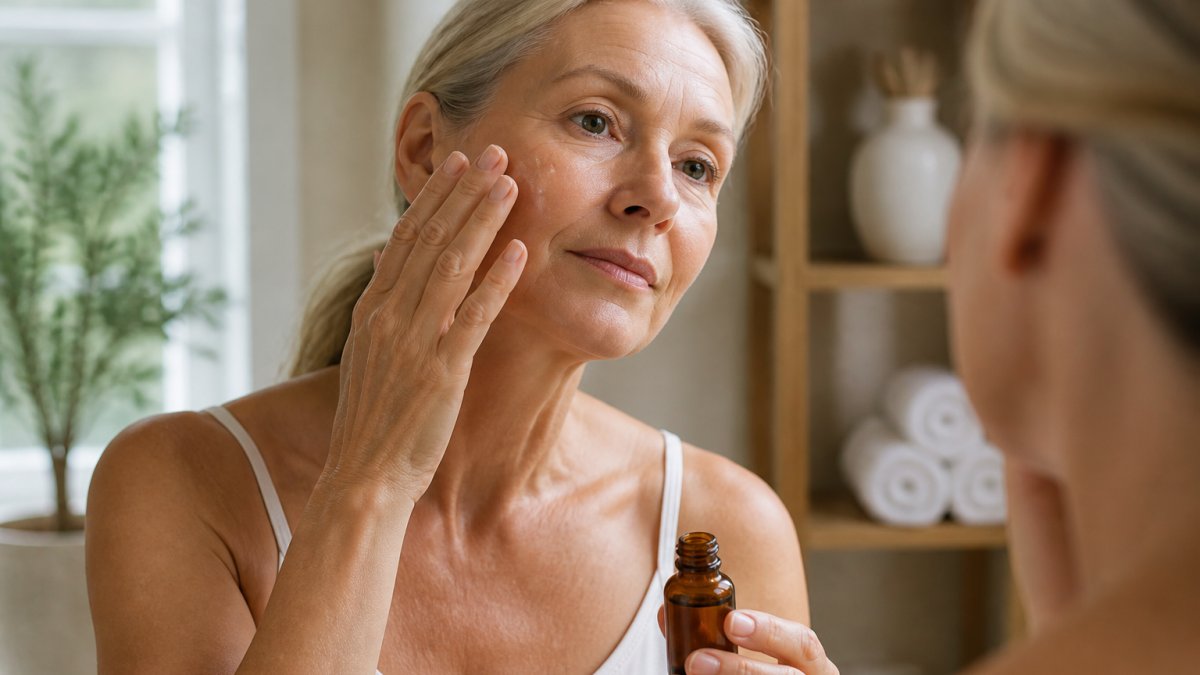
Here is the routine we recommend:
- Cleanse with lukewarm water and pat dry, leaving skin slightly damp.
- Mist with a hydrating face mist if skin feels tight.
- Press 2 to 3 drops of serum into face, neck, and décolleté.
- Allow 30 to 60 seconds for absorption.
- Apply moisturizer to seal.
- In the evening, follow with a botanical oil if skin is very dry.
If you want a ready-made sequence, our 3-step routine to quench dry skin pairs each step for you.
Choosing Your Hydrating Serum
Choose based on your barrier, not your age. If your skin stings easily, start with the barrier-supporting Renewal formula. If it is simply dry and dull, the overall pick covers hydration and smoothing in one step. If it feels tight and rough by midday, add the Rose Otto oil at night to seal moisture in.
One honest limitation: no serum fixes a damaged barrier overnight. Give any formula four to six weeks of consistent daily use before judging it, and introduce one new product at a time so you can tell what is working.
Dry, sensitive skin does not need a ten-step routine. It needs a short list of gentle, transparent formulas applied in the right order, every day. Natural Beauty Skincare® makes that simpler with 99% natural, vegan serums built for reactive skin, handcrafted in our GMP-certified facility and carried at Whole Foods Canada since 2012. Start with the Organic Sacred Frankincense Hyaluronic Acid Serum, layer it under moisturizer, and give your barrier the consistency it needs. Get started with Natural Beauty Skincare® and build a routine your skin can actually tolerate.
Frequently Asked Questions
What should you look for in a hydrating serum for sensitive skin?
Look at the base and the preservative system before the headline ingredient. A rose hydrosol or aloe base soothes more than plain water, and a stable vitamin C derivative such as sodium ascorbyl phosphate is far gentler than L-ascorbic acid. Check that the label says fragrance-free rather than unscented, and confirm it is free from parabens, sulfates, mineral oil and synthetic fragrance. A short, botanical ingredient list with humectants like glycerin and aloe, plus a plant polysaccharide for moisture-binding, is a safer starting point for reactive skin.
Can a hydrating serum be used every day?
Yes. A hydrating serum built on humectants and botanical extracts is designed for daily use, morning and evening. Apply two to three drops to clean skin, let it absorb, then follow with moisturizer. If your skin is very reactive, start once a day for the first week and watch for tightness or redness before adding a second application. Daily use matters more than quantity: consistent layering under a moisturizer does more for moisture retention than a heavy application once a week.
Should you apply moisturizer after a hydrating serum?
Always. A hydrating serum is a humectant layer: it attracts and holds water in the upper skin, but it needs an emollient or occlusive on top to seal that moisture in. Without a moisturizer, water can evaporate and leave skin feeling tighter than before. The order is cleanser, toner or mist, hydrating serum, then moisturizer. In winter or in dry indoor air, a richer moisturizer or a facial oil over the serum helps with moisture-sealing through the day.
How do you tell dehydration from a dry skin type?
Dry skin is a skin type: it produces less oil, feels rough, and flakes in patches all year. Dehydrated skin is a temporary state: it lacks water, looks dull, feels tight after cleansing, and shows fine lines that disappear once you moisturize. Dehydration can affect oily skin too. If your skin feels tight but looks shiny, you are likely dehydrated rather than dry. Both benefit from a hydrating serum, but a dry skin type also needs barrier support from ceramides or plant oils.
How do you rehydrate extremely dry skin in winter?
Layer water-based hydration under an oil-based seal. After cleansing, while skin is still damp, press in a hydrating serum, then apply moisturizer and a few drops of facial oil on top. Indoors, low humidity pulls water from skin, so a humidifier in the bedroom helps. Avoid hot showers and foaming cleansers, which strip lipids. If flaking and redness persist after two weeks of consistent layering, see a dermatologist to rule out a barrier condition.


Leave a comment