

How to Use Aromatherapy in Your Facial Products

Quick Summary
Aromatherapy facial products use botanical oils and plant extracts for their scent and skin benefits. They fit naturally into a daily routine, and the article notes that consistent use over several weeks matters more than any single ingredient.
- Named botanicals such as lavender and chamomile are traditionally used for their soothing feel on skin.
- Give a product several weeks of consistent use before judging its results.
- Patch-test new products on your jawline for 24 to 48 hours before full-face use.
- Apply facial oil as the last step, using 2 to 3 drops warmed between your palms.
- Read the ingredient list and look for named botanicals rather than vague fragrance terms.
Table of Contents
- What Aromatherapy Means in a Facial Product
- The Benefits of Aromatherapy for Facial Skin
- How to Use Facial Oil in a Daily Routine
- Building a Facial Oil Skincare Routine Step by Step
- Trying an Aromatherapy Facial Massage at Home
- Choosing Your First Aromatherapy Facial Product
- Frequently Asked Questions
What Aromatherapy Means in a Facial Product
Last Updated: October 30, 2026
Aromatherapy in a facial product means using botanical oils and plant extracts for their scent and their skin-loving properties, which is why aromatherapy facial products pair so well with a daily ritual.
Aromatherapy is the use of plant-derived essential oils to support how we feel and how our skin looks. In facial care, that means choosing oils and flower waters that are gentle, calming and suited to your skin type.
Aromatherapy in skincare refers to the use of concentrated plant compounds, applied topically in a carrier, mist or cream, to support skin comfort and the overall sensory experience of a routine.
Not every "natural" product works the same way. Some rely on fragrance alone, while others use botanicals in amounts that actually support the skin. Read the ingredient list and look for named botanicals rather than vague terms like "fragrance blend."
The Benefits of Aromatherapy for Facial Skin
The benefits of aromatherapy in facial products fall into three practical groups: skin comfort, sensory ritual, and routine consistency. Each works through a different mechanism, and understanding that helps you set realistic expectations.
- Skin comfort: Botanicals such as lavender and chamomile are traditionally used for their soothing feel on skin. A lightweight mist or oil can help skin feel comfortable and supple.
- Sensory ritual: A pleasant scent makes a daily routine feel like a small ritual. Many people find that a consistent, pleasant-smelling routine is easier to keep up with, and consistency is what makes most skincare ingredients work over time.
- Routine consistency: Because aromatherapy products are enjoyable to use, they can help you stick with cleansing, misting, and moisturizing. That consistency supports skin comfort more than any single ingredient.
A common mistake is expecting dramatic overnight changes. Botanicals work gradually, so give a product several weeks of consistent use before judging it.
Our Organic Lavender Facial Mist is a simple place to start among our aromatherapy facial products. It hydrates and refreshes skin at any time of day. Readers who want a lightweight way to add aromatherapy to their daily routine can try a ready-made lavender face mist.

How to Use Facial Oil in a Daily Routine
Facial oil works best as the last step of a morning or evening routine, after cleansing and any water-based products. Oil seals in moisture and helps hold on to hydration already in the skin.
Here is a simple way to add it to your day:
- Cleanse your face with a gentle cleanser.
- Exfoliate 2-3 times a week with the Micro Gel Exfoliant.
- Apply a hydrating mist or toner to damp skin.
- Warm 2 to 3 drops of facial oil between your palms.
- Massage gently into your face and neck.
For a lighter finish, spritz a mist over your face after the oil has settled. This refreshes the skin without adding more heaviness.
Why Jojoba Oil for Face Works Well as a Base
Start with a small amount on one area of your face first to see how your skin responds.
Building a Facial Oil Skincare Routine Step by Step
A facial oil skincare routine doesn't need many steps. Keep it simple and consistent:
- Cleanse: Use a gentle cleanser that doesn't leave skin tight.
- Tone or mist: Refresh skin and add a layer of hydration.
- Serum or moisturizer: Apply a richer product for dry or sensitive skin, such as our Aroma GLOW Face Therapy, a rose otto moisturizer for dry, sensitive and rosacea-prone skin.
- Oil: Finish with a few drops of facial oil to lock everything in.
Most people benefit from doing this morning and night. If your skin feels tight, add a mist midday. For more on which natural steps suit dry skin, read our guide to natural skincare for dry skin.
Start with one new product at a time. This makes it easier to tell what your skin likes. To choose a serum for this stage, see what to look for in a hydrating serum for dry, sensitive skin.
Organic Lavender Facial Mist | Hydrating Natural Face Mist →
Trying an Aromatherapy Facial Massage at Home
A facial massage is a simple way to bring aromatherapy into your routine. Gentle pressure and slow movements can make the experience feel relaxing.
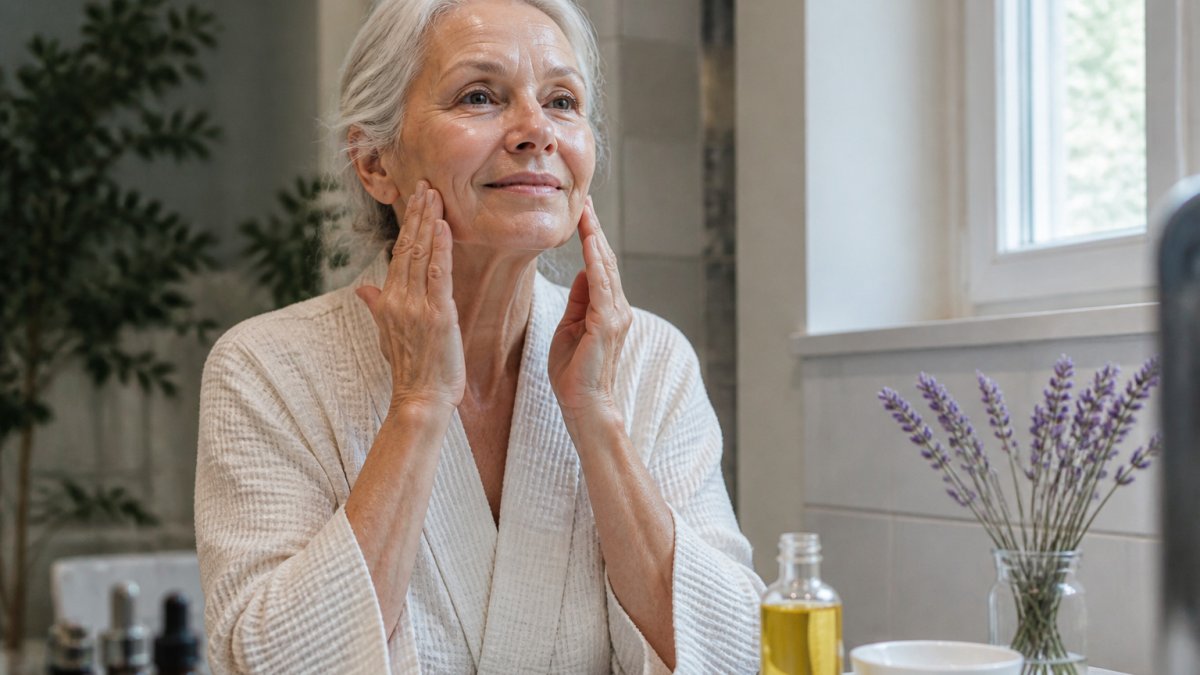
!A woman in her sixties gently massaging a botanical facial oil onto her cheeks in a bright bathroom with a small glass bottle and fresh lavender sprig on the counter
Try this easy routine:
- Warm a few drops of oil between your palms.
- Use upward strokes along your jawline and cheeks.
- Press gently around the eyes with your ring finger.
- Finish with slow circles on your forehead.
Keep the pressure light. Stop if you notice any discomfort.
Choosing Your First Aromatherapy Facial Product
Choosing a first product is easier when you start with your skin type and read the label carefully. If your skin is dry or sensitive, look for rich, gentle formulas. If you prefer something light, start with a mist. You can compare a rose otto moisturizer designed for dry, sensitive and rosacea-prone skin to see how it is formulated.

Consider these questions:
- Does my skin feel tight or dry after cleansing?
- Do I react easily to fragrance?
- Do I want a quick refresh or a deeper moisture boost?
Read the ingredient list first. Named botanicals such as lavender, chamomile, frankincense, and rose otto are a good sign. Vague terms like "fragrance blend" or "parfum" tell you less about what is actually in the product.
Check the carrier. In a facial oil, the carrier oil is the base that dilutes the essential oils. Jojoba, sweet almond, and rosehip are common carriers.
Assess concentration and formulation. Essential oils are potent, and facial products should use them diluted in a carrier. If a label lists essential oils first with no carrier, treat that as a sign the product may be too concentrated for facial use.
For a lightweight start, try our Organic Lavender Facial Mist at $21.99 CAD. For a richer option aimed at dry and sensitive skin, the Aroma GLOW Face Therapy is priced at $39.99 CAD.
If you are comparing many options, look at ingredient lists first. Named botanicals and simple formulas are a good sign. For an overview, see this curated list of organic, cruelty-free beauty products.
The article's guidance on choosing a first product comes down to a few label checks, summarised below.
| Label check | What to look for | Why it matters |
|---|---|---|
| Ingredient list | Named botanicals such as lavender, chamomile, frankincense, rose otto | Tells you more about what is in the product |
| Vague terms | "Fragrance blend" or "parfum" | Offers little detail on actual contents |
| Carrier oil | Jojoba, sweet almond, rosehip | Dilutes the essential oils for facial use |
| Essential oil placement | Listed after a carrier, not first | Signals a formula suited to facial use |
| Skin type fit | Rich formulas for dry or sensitive skin; mist for light use | Matches the product to your skin's needs |
Frequently Asked Questions
What are the benefits of aromatherapy in facial products?
Aromatherapy facial products combine botanical extracts and essential oils with a skincare base to deliver scent alongside skin care. Lavender and chamomile are commonly used for their calming, soothing qualities, while plant-based oils such as jojoba provide hydration. Many people with sensitive or dry skin choose these products for their gentle, plant-based formulas. Results vary by person, so start with one product and observe how your skin responds over several weeks.
How do you use facial oil in a skincare routine?
Apply facial oil after cleansing and any water-based toner or mist, while skin is still slightly damp. Warm two to three drops between your palms and press them onto your face and neck. Facial oil can be used after a moisturizer as a final layer, or on its own in the evening if your skin feels dry. Start with a small amount and increase only if your skin still feels thirsty.
Can facial oils be used with moisturizer?
Yes. Apply your water-based products first, such as a toner or mist, then a light moisturizer, and finish with a few drops of facial oil to seal hydration in. If you have oily skin, you may prefer to use oil only in the evening or skip the moisturizer on some nights. Introduce one change at a time so you can tell what your skin prefers.
How often should you use a facial oil?
Most people with dry or mature skin use facial oil once or twice a day, morning and evening. If your skin is combination or oily, a single evening application is often enough. Begin with use every other day for the first week to check your comfort level, then adjust based on how your skin feels and looks.
Ready to add aromatherapy to your routine? Explore our Natural Beauty Skincare® collection and find a gentle, botanical product that suits your skin.


Leave a comment